One mark
At the start, use one limb on this hold: one hand or one foot.

At DSKALA, names and colors help you find your way. V-scale ranges describe approximate difficulty, not the person climbing.
First moves and getting familiar with the wall.
Practice footwork and basic movement.
Challenges that combine technique and problem reading.
More demanding moves and sequences that take practice.
Problems that develop precision, strength and more complex solutions.
Advanced challenges to work on over several attempts.
High-difficulty projects with demanding movement.
Ranges overlap, and style affects how a problem feels. Start comfortably and ask the team if you need guidance.
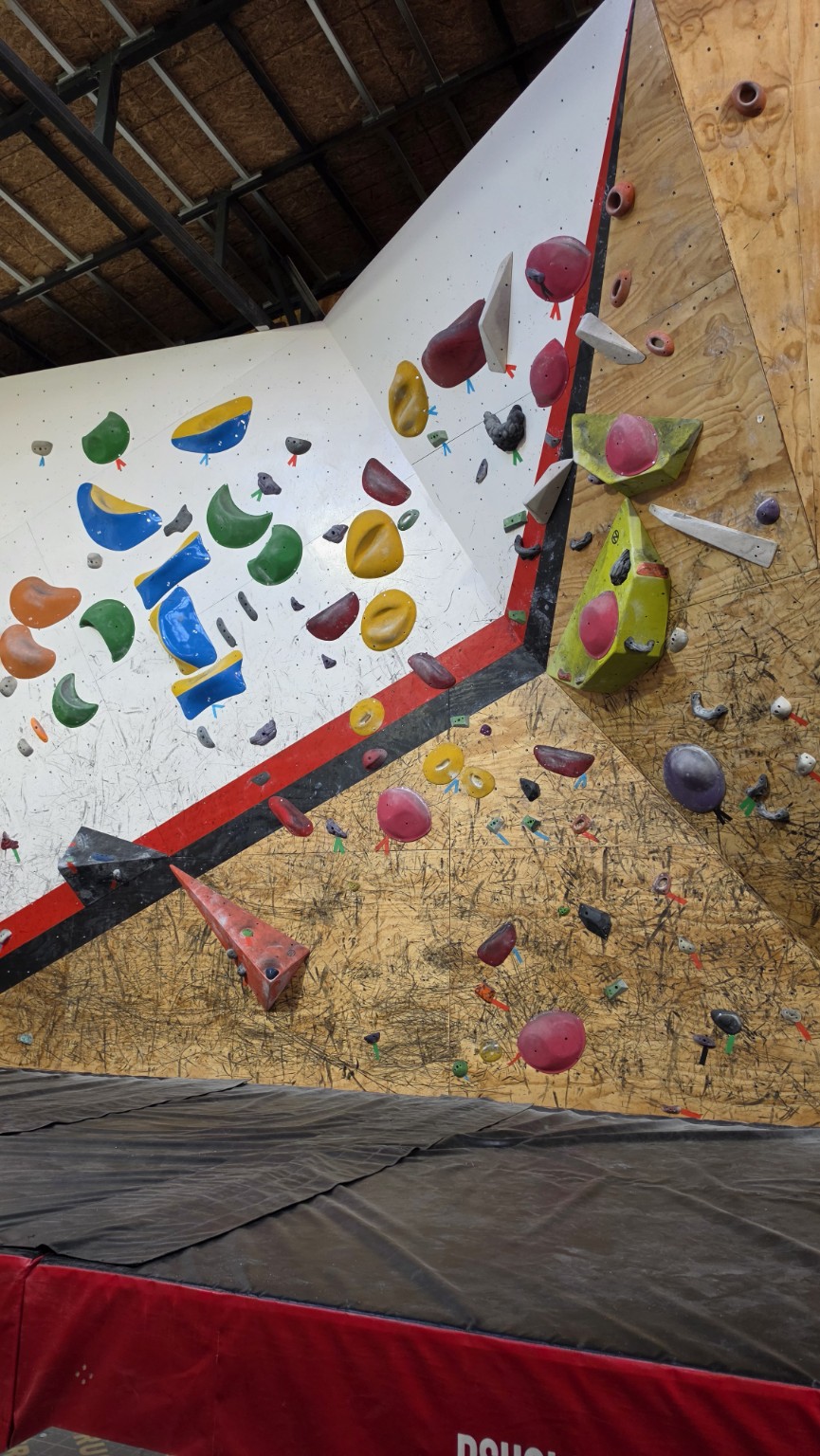
The level color indicates approximate difficulty. Before starting, check the problem’s label and ask the team to show you the starting holds and the line.
My first visitMost of our boulder problems are labeled from the starting holds to the finish. Check the markings before you begin.
At the start, use one limb on this hold: one hand or one foot.
At the start, use two limbs on this hold, according to the problem’s starting position.
Control the finishing hold steadily with both hands.
Marks holds for downclimbing. These holds are not part of the boulder problem.
Labels help you follow the problem. If a mark or the start is unclear, ask our staff before climbing.